10-day vaccination programme for vendors

in bulawayo

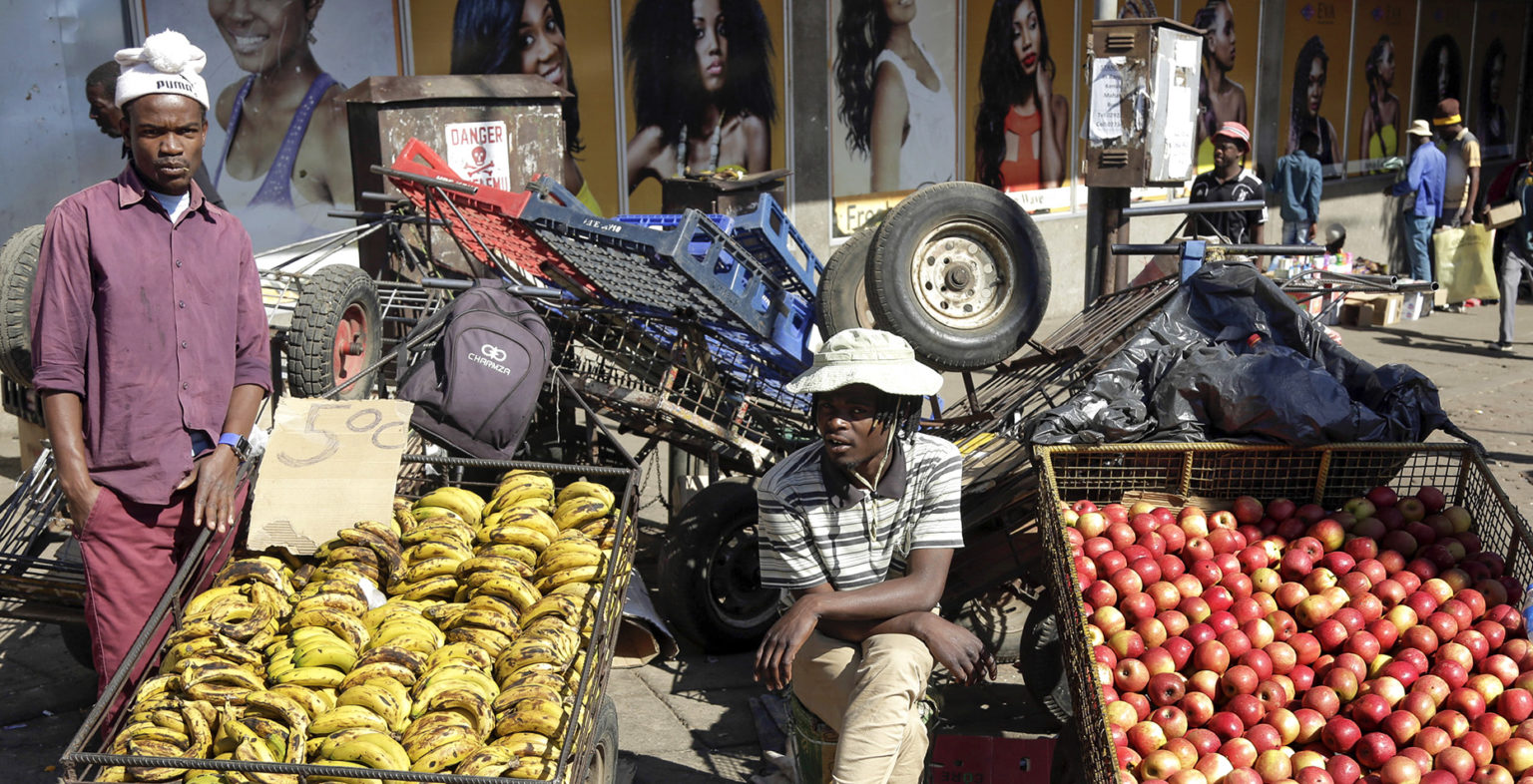
Vendors in Bulawayo Photo: Mzingenkosi Sibanda /Urbanculture

On Tuesday scores of vendors thronged various Covid-19 vaccination centres to take a jab after the government announced the roll out programme that is targeting to vaccinate 15 000 informal traders at marketplaces considered as hotspots.

According to the Sunday News, Dr Edwin Sibanda, the Bulawayo city health services director mentioned that 1200 vendors were jabbed on the first day of the vaccination programme for informal traders which is scheduled to run for the next 10 days.

In an interview with the Christian Voice, Bulawayo Vendors and Traders Association (BVTA) director, Mr Michael Ndiweni said there was a massive turn up of traders especially on the second day and some of the people had to be turned away as the centre would have reached their target for the day.

“More people flocked in to get the jab on Wednesday and there was more chaos compared to the first day.  People queued from morning till late afternoon to get vaccinated and we were told in some areas there were some people who were being turned away because the centre had reached the target number for the day.

There were also some people who were not traders who were trying their luck, there was some sort of misinformation about who is supposed to benefit from this vaccination drive,” he said.

On the first day, some of the vendors were sent back home as they did not have vending licenses to prove that they were indeed formal traders. However, this issue has been resolved as the traders association managed to engage the local authorities about the matter.

“There was a challenge with the traders particularly on Tuesday,  but we raised that issue with the authorities and it was resolved that people can use their market registers for those that are renting privately owned markets or are workers for other people,” said Ndiweni.

On the eve of Tuesday, the cabinet announced stricter Covid-19 regulations following the upsurge of positive cases in the country.  Citizens are now required to produce travelling documents from their employers for them to access the central business district (CBD).

“There is no mechanism that we have put in place in line with the post cabinet announcement on exemption letters, but we have written a statement demanding clarity so that it does not confuse traders even in terms of going for their vaccination and doing their business,” he said.

Mr Ndiweni said there was need for the government to be comprehensive when making such announcements as the current statement was not clear on how the informal traders continue with their work or even access the Covid-19 mobile clinics for their jab.

 “We feel that the statement was a bit discriminatory because It spoke about employed people,  what about those who are self-employed. I think the government, when they are giving their statements, should be comprehensive enough to address everyone who is either self-employed or employed by someone,” he said.

One of the vendors, Ruvarashe Tembo trading at Entumbane complex said vendors are very happy that they have been given the opportunity to vaccinate against Covid-19 but the challenge they were now facing was accessing exemption letters.

“This is very confusing now; we were still celebrating that the government has rolled out a programme that will see us vendors being vaccinated. Now how are we going to access those mobile clinics when we are self employed and getting these travelling documents is such a hustle,” said Mrs Ruvarashe Tembo, a vendor at Entumbane complex. 

Ntombikayise Moyo said there was need to explain how the vendors will operate under these new restrictions.

“Since the government wants exemption letters then does it mean we will use our licenses to access our vending stalls or does this mean we are no longer allowed to operate. I hope that the  government will rethink this because some of us rely on sales from the markets to put food on our tables for our families,” she said.
 

Churches pray for peace at Eswatini

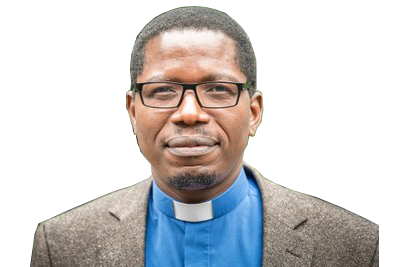
Dr. Rev Kenneth Mtata- Secretary General for the Zimbabwe Council of Churches (ZCC)

Dr Reverend Kenneth Mtata- Zimbabwe Council of Churches Secretary General

Church leaders in the Fellowship Christian Council in the Southern Region have joined hands in prayer for the church and people of Eswatini. This follows a civil unrest in the country where people are being brutalised by members of the security sector, shops being vandalised and burnt.

In an interview with the Christian Voice, Reverend Kenneth Mtata the secretary general for Zimbabwe Council of Churches said   the Fellowship Christian Councils in Southern Africa (FOCCISA) which us headed by ZCC has done an assessment of the situation in Eswatini and will be writing to the Southern Africa Development Committee.

“We have received news of very violent clashes between protesters and armed security members. What we have decided to do through the instructions of the churches in Eswatini is to write to the SADC asking them to oversee a comprehensive process of dialogue that involves all the key stakeholders, not just the government,” he said.

Rev Mtata also mentioned that they were also calling on the international community to support the churches in initiating a national dialogue which could be one of the ways of stopping the unrest in Eswatini.

“We call on the SADC body to initiate a national dialogue for an immediate stop to the violence. We are also asking that the international community must support the process of this national dialogue process,” he said.

He mentioned that they were working with churches in Eswatini to verify some of the details such as the number of people who have been affected by these clashes or killed.

“We still need to verify the number of people who have been killed. The state says its one person, but other sources say its 60 people or more. Member churches in Eswatini are doing an analysis on it because they are the ones who are on the ground and can do the right assessment,” he said.

A prayer has been organised by FOCCISA in solidarity with the people of Eswatini which is meant to give them hope as well as show the intensity of their situation to other communities outside the African continent.

“An ecumenical prayer service in solidarity with the people of Eswatini has been organised by FOCCISA and this is meant to give support to the churches and the people at Eswatini. The prayer is also meant to highlight the situation to many stakeholders,” said Rev Mtata.

Commenting on the situation at Eswatini, the Zimbabwe Christian Alliance (ZCA) board chairman, Bishop Obert Shatai said the killing of defenceless people was inhuman. Bishop Shatai said it was important for the church to pray for God’s intervention and sanity prevails in Eswatini.

“We pray and hope for God’s intervention and for peace to prevail in Eswatini. We call upon all the responsible bodies such as the SADC to initiate peace talks. It is very unfortunate that we are killing each other instead of resolving conflicts in an amicable way. Our leaders need to appreciate the importance of dialogue in solving conflicts instead of resorting to violence,” he said.

Pastor Kilton Moyo said the situation at Eswatini was very unfortunate, but it was bound to happen as the people Eswatini couldn't have put up with monarchy forever. He said the ongoing unrest was a revelation of what has been hidden inside the monarchy.

“ I think it is lack of wisdom and the current understanding of the global trends in terms of the monarchy itself for having continued to suppress democratic opinions and principles  in that country so far. The monarchy has been manipulative, oppressive, and abusive of women and children in the name of culture and tradition,” said Pastor Moyo.

Pastor Moyo urged SADC to act extremely fast in responding to the Eswatini situation before it spreads to other countries in the region. He went on to mention that most unresolved political crisis and questions within the SADC countries were issues that needed urgent attention.

“The region is slowly falling into turmoil, slowly flowing into the hands of the enemy. I think and believe the unresolved political crisis and questions in SADC countries are a door for the enemy to come in and destabilise our region.  African governments are giving the enemy that opportunity to infiltrate, look at what is currently happening in South Africa it could also lead to unrest,” he said.

He identified the church as a major stakeholder in bringing back order and sanity in Eswatini. Pastor Moyo said the religious sector can work together to influence and push the church leadership to bring about change.

“The church has authority, and it can do it if they want to. They can go to Eswatini and engage the monarchy and the government to bring back order and sanity. For the church to do so they also must stop thinking politically but spiritually. The church can speed up the engagement and put pressure on the government to normalise the situation,” he said.

Writing on his Facebook page, Habbakuk Trust director, Dumisani Nkomo said there was need for a regional intervention and a roadmap for democratic reforms. He also mentioned that a settlement would be the best route to take in normalising the situation. 

Healing the wounds of Zimbabwe

IMG-20210421-WA0013

by Kimion Tagwirei

The recent demolition of houses in some parts of Zimbabwe, hiking of ZUPCO fares and insensitive voices trivializing Gukurahundi issue, amid economic and political instability further freshened old wounds of multiple Zimbabweans whose tears should be wiped through sensitive and due considerations.

The bulldozing of houses is an excruciatingly devastating experience in the repeating history of Zimbabwe. It is a brutal experience reminiscent of the infamous ‘Operation Murambatsvina’ through which the government demolished ‘illegal structures’ across Zimbabwe.

Statements that the houses were illegally built on undesignated locations appear inconsiderate as responsible authorities saw them being built and could have stopped the projects before their costly completion. Why authorities cannot deal with cooperatives which ‘illegally’ sell stands remains strange and unthinkable in a modern society.

If those behind the cooperatives are giants that cannot be stopped, if the housing ministry sleeps on duty, only wakes up late and runs on destroying mode; poverty–stricken citizens who desperately and tearfully built keep losing out. Their tears deserve kind attention. 

As if that has not been tough enough, the Zimbabwe United Passengers Company (ZUPCO), which enjoys a public transport monopoly, increased fares by hundred percent. That came just as another lockdown, restricting business, gatherings and travelling, was imposed. 

Bearing in mind that lockdowns, although helping the nation to withstand the spread of tragic coronavirus, also negatively affects livelihoods as people’s incomes get limited; hiking the only legalized public transport is unbearable. 

ZUPCO’s fare hike was also effected while workers’ salaries are low, business owners struggle to survive against fluctuating economic policies and the generality of Zimbabweans sweat to make ends meet.  

It appears too ghastly to contemplate the banning of privately owned public transport as that denies citizens transport options. While the privately owned public transport agreeably had their problems such as operating from undesignated places and endangering lives, they remained needful for travellers to use whenever need arise. Instead of banning them, responsible authorities could simply bring them to order. 

Arguments that the privately owned public transport operators were not abiding by Covid-19 protocols seem lame as ZUPCO failed to abide too. Most ZUPCO operators have been overloading, working without sanitization while their staff at times improperly masked and some of them did not mask up at all.

Meanwhile, voices that trivialize the Gukurahundi case, such as submissions of the National Peace and Reconciliation Commission spokesperson Obert Gutu, who said that Gukurahundi was a small fraction of issues that they are dealing with, aggravated pains of those wounded by the unfortunate past. Gukurahundi victims, survivors and relatives have wounds that need healing, and tears that must be wiped through courteous processes. 

Almost all ordinary Zimbabwean citizens bearing the brunt of economic and political challenges groan in pain. In such a distressed predicament, the demolition of houses, hiking of ZUPCO fares, insensitivity to past tragedies and related misfiring should be faithfully dealt with.     

Tears of politically and economically wounded Zimbabweans should be wiped through faithful, inclusive economic and political recovery engagements, genuine walks of the anti–corruption talks, repealing of monopolization, not only of ZUPCO, but of the entire public service.

Our openness for business should be confirmed by opening up electricity, water provision and related businesses to local and foreign private players. Mere words suggesting that we are doing well when public service delivery remains erratic and costly, while citizens languish in poverty worsen old wounds, pains and tears.

Conclusively, as Covid–19 pandemic hits us hard, our past and present political, economic, social and spiritual issues demand faithful, not inhumane engagements so that tears of the wounded, and wounding may be wiped – hurt citizens can heal when our nation turns from retrogression into progressive drive.


Leading from the heart

jonah 2

Jonah Nyoni- Author and Motivational Speaker

THE failure of any country or organisation is from its leaders. Our success and the lack of it is mainly from leaders. What do we need to do to become better as a country? The system is entangled in retrogressive principles that hurt the majority and benefit the few. The pain is we lack leaders that are going to lead from the heart.

As long as we have leaders that are not touched by plights, problems and the pains of a homeless child, and a helpless grandmother, we are not ready to lead. We are just leading for our selfish interests. This allegory trickles down to companies, church, family, and all forms of leadership in the country.

Leading from a place of purpose

When you lead knowing there is a bigger and a better cause, you lead differently. Leadership is all about significance and influence. When we lead knowing that we want to leave this world a better place, we lead differently.

We have people who are in a position of leadership but can’t take their position to lead. The heart of leadership is pushing the masses to a place of purpose. As you lead people, everyone works harder as long as they know that there is a greater purpose to fulfil.

Leadership needs people that are selfless

Caring is one ingredient that makes a leader very effective. Those that work under you are not machines with no feelings. First, learn to touch the heart before you ask for a hand. Yes, you can coerce people to do what you want through threats, but you do it even better when you lead from a point of love, humility and care. When people feel loved, they are willing to contribute and collaborate with the leader. The true power of a leader is the ability to influence to do positive things in your absence for the great good of your vision.

Great leaders honour humanity

There is nothing so soothing to an employee, like knowing that your efforts are honoured by the leader. Team players need to be honoured. If you honour people, they are willing to give you more in turn. People don’t just work for a salary, they work for a greater good. In this life, I have since realised that leaders are very quick to point the worst things you do, than the good you do. When you honour people, you move their hearts, and it becomes easy to ask for their helping hand.

Encouragement ignites a greater purpose

You can ignite people to do more by encouraging them. If you encourage people as their leader, you are simply telling them that they matter to you. If people know that they matter, they give you the best respect and efforts you deserve. People are willing to do more, as long as they know that they matter. The people of Zimbabwe are willing to give more, as long as leaders know that we matter. Incite, ignite and inspire people to do more by encouraging them.

Walk with the people

Generally, leadership has turned into something else. You check churches, where we should be getting archetypes of great leadership it’s where we see the worst. You see pastors guarded by heavy bodyguards and wonder what they are afraid of. They don’t want to walk and work with people, but they want to remain condescending and loftily powerful. Leaders should not be untouchable celebrities, but warm servants. What we see in government and companies are bosses that are up there, and are not willing to come down and eat with you at the table. These are heartless leaders, and when they fall instead of people sympathising with them, people laugh at them because they never empathised and cared at all.

Honesty

When the leader lacks honesty, their brand is at stake. People don’t trust dishonest leaders. If you are not trusted as a leader, people in your team are not comfortable being around you. The leader-follower marriage is glued together using honesty.

The heart is the centre of our feelings. That’s why you hear people say, ‘I’m heartbroken.’ If a leader does not use the heart to lead, they lose touch with people’s feeling. If they can’t feel anything for people, they are prone to abusing people. We need to be an example of the world we want to see around us as leaders. William Hazlitt once said, “The seat of knowledge is in the head, of wisdom, in the heart.” Lead from the heart.

Jonah Nyoni is an author, speaker and leadership trainer. Twitter@jonahnyoni. Whattsapp:   +263 772 581 918

Hwange Concession toilets…a ticking time bomb

The situation at Concession is quite devastating. There is no water supply and people assist themselves anywhere. With the third wave of the Covid 19 pandemic upon us, it is worrying that such a large number of people are exposed as they do not have access to effective hygiene.
Apostle Siyaphambili Moyo

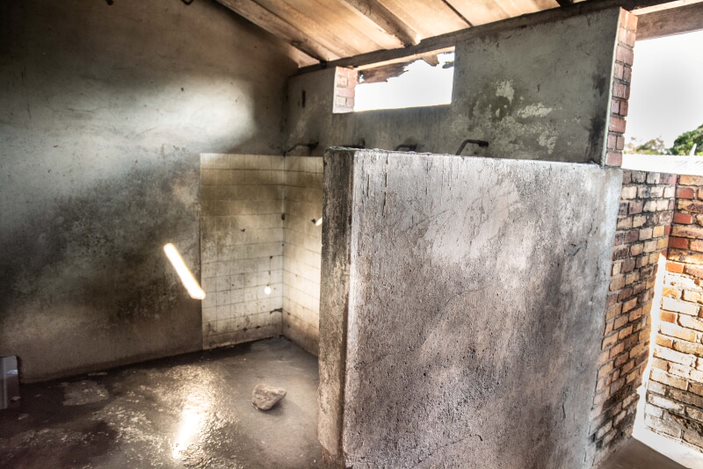
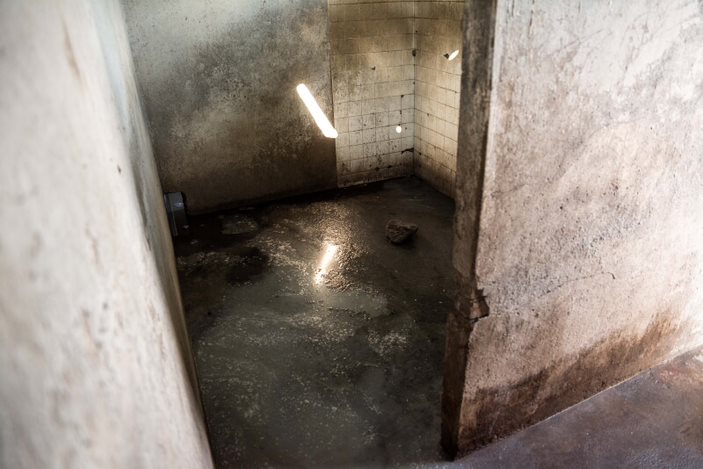
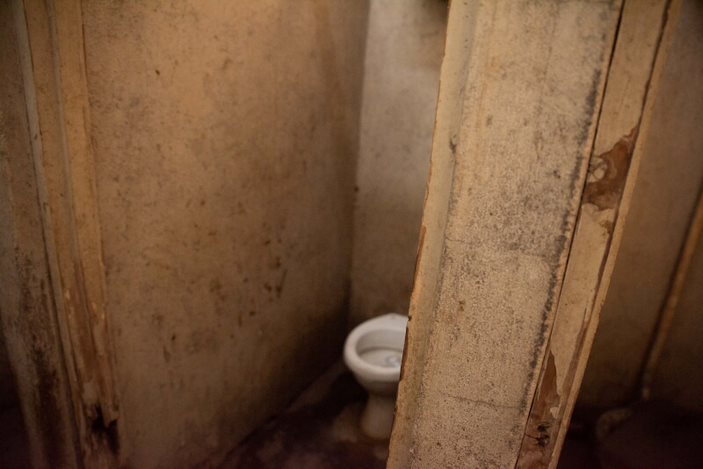
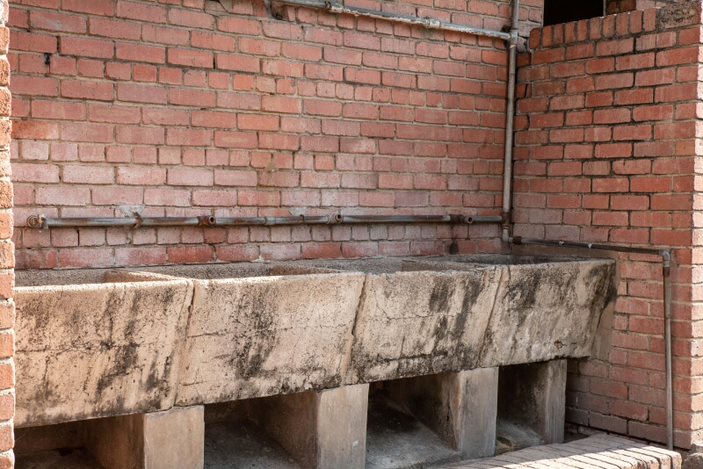
Residents staying at Hwange Colliery concession compound are at a serious health risk as their ablution blocks have no water, pipes are damaged, and most of the toilets are broken.

The ablution blocks at number 1 and number 2 compound in Concession area cater for approximately eight thousand people but the blocks are now not enough to cater for the growing population.

The dire situation at these compounds has led to unhygienic behaviours where residents are using open spaces for defecation, further exposing the community to more health-related challenges.

According to the World Health Organization, safely managed water, sanitation and hygiene services are essential for preventing and protecting human health during infectious disease outbreaks, including the current Covid-19 pandemic.

In an interview with the Christian Voice, Apostle Siyaphambili Moyo, the Zimbabwe Christian Alliance (ZCA) hub coordinator for Hwange district said people at the Concession are sitting on health time bomb, he said the responsible authorities need to this matter with urgency before a life is lost.

"The situation at Concession is quite devastating. There is no water supply and people assist themselves anywhere. With the third wave of the Covid 19 pandemic upon us, it is worrying that such a large number of people are exposed as they do not have access to effective hygiene," said Moyo.

Water supply, sanitation and hygiene facilities are fundamental to stopping the spread of Covid 19 in communities and to mitigate secondary impacts on people's wellbeing. The ablution facilities situation has also left women exposed to harassment and abuse by some uncouth elements in the compound.

"The bathrooms are filthy and have no lighting system. Some people like myself prefer to bath outside at night as it seems like a relatively cleaner option. Unfortunately, at times you have some men torching us with lights to see us naked,” said one of the locals who preferred anonymity.

The toilets at Concession have been in this dilapidated state for the past five years. Church leaders in Hwange have been advocating for the improvement of the facilities with the relevant authorities but with no luck.

Pastor Lwisani Sibanda, a resident at the compound highlighted that residents had engaged with the Hwange Colliery Company Limited on the matter, but to no avail.

"Last year we tried to talk to the responsible authorities on the issue of lighting. We were advised that it is residents who constantly steal the lights each time they are replaced. The situation is deplorable," said the clearly distraught Sibanda.

"Children have nowhere to play, as the compound is used by residents as a toilet. It gets worse during the rainy season with the dirt flowing all over," said Mrs Similo Mwenje, a mother of three.

Captain Saini Bhidi, a member of the Covid Taskforce, representing the pastors indicated that he has been working with other pastors in the area to try and source assistance from partners and friends.

" We cannot afford to sit back when the situation at the compound is so deplorable, especially now with the covid-19 pandemic.  We are working with ZCA hub members to try and get any possible assistance to refurbish the facilities.

Residents staying at Hwange Colliery concession compound are at a serious health risk as their ablution blocks have no water, pipes are damaged, and most of the toilets are broken.

The ablution blocks at number 1 and number 2 compound in Concession area cater for approximately eight thousand people but the blocks are now not enough to cater for the growing population.

The dire situation at these compounds has led to unhygienic behaviours where residents are using open spaces for defecation, further exposing the community to more health-related challenges.

According to the World Health Organization, safely managed water, sanitation and hygiene services are essential for preventing and protecting human health during infectious disease outbreaks, including the current Covid-19 pandemic.

In an interview with the Christian Voice, Apostle Siyaphambili Moyo, the Zimbabwe Christian Alliance (ZCA) hub coordinator for Hwange district said people at the Concession are sitting on health time bomb, he said the responsible authorities need to this matter with urgency before a life is lost.

"The situation at Concession is quite devastating. There is no water supply and people assist themselves anywhere. With the third wave of the Covid 19 pandemic upon us, it is worrying that such a large number of people are exposed as they do not have access to effective hygiene," said Moyo.

Water supply, sanitation and hygiene facilities are fundamental to stopping the spread of Covid 19 in communities and to mitigate secondary impacts on people's wellbeing. The ablution facilities situation has also left women exposed to harassment and abuse by some uncouth elements in the compound.

"The bathrooms are filthy and have no lighting system. Some people like myself prefer to bath outside at night as it seems like a relatively cleaner option. Unfortunately, at times you have some men torching us with lights to see us naked,” said one of the locals who preferred anonymity.

The toilets at Concession have been in this dilapidated state for the past five years. Church leaders in Hwange have been advocating for the improvement of the facilities with the relevant authorities but with no luck.

Pastor Lwisani Sibanda, a resident at the compound highlighted that residents had engaged with the Hwange Colliery Company Limited on the matter, but to no avail.

"Last year we tried to talk to the responsible authorities on the issue of lighting. We were advised that it is residents who constantly steal the lights each time they are replaced. The situation is deplorable," said the clearly distraught Sibanda.

"Children have nowhere to play, as the compound is used by residents as a toilet. It gets worse during the rainy season with the dirt flowing all over," said Mrs Similo Mwenje, a mother of three.

Captain Saini Bhidi, a member of the Covid Taskforce, representing the pastors indicated that he has been working with other pastors in the area to try and source assistance from partners and friends.

" We cannot afford to sit back when the situation at the compound is so deplorable, especially now with the covid-19 pandemic.  We are working with ZCA hub members to try and get any possible assistance to refurbish the facilities.

Covid-19: Life hard for street vendors

Covid-19: Life hard for the street vendors


Vendors selling their fruits : (Photo: APA-EFE/Aaron Ufemedi

The life of street vendors continues to be hard because of COVID-19 restrictions. The Christian Voice went into the streets and interviewed some vendors. Street vending is associated with crowding, which is generally against social distancing as prescribed by the World Health Organization (WHO) and the Zimbabwe Ministry of Health and Child Care. 

Some vendors said that the COVID-19 regulations are repressive and a violation of human rights. Talking to Tendai Gova, a vendor along 6th street in Bulawayo said life has become a nightmare.

“My life as a vendor changed since the start of COVID-19. When the government announced a lockdown last year I kept my goods at home and only a few people that knew me came to buy from home. When we came back to the streets, life has been hard. We are always on the run, as the Bulawayo city council Police is always on our case for selling illegally. I have had my goods confiscated by the same police, and that killed all my profits.”

A male vendor who requested anonymity pointed out that, street vending has now become a hard craft and requested that the government be kind and human enough and consider their plights.

“Life is now hard. Government should provide jobs so that we stop vending. If they can’t, we should not be stopped from it. If I stay at home you die of hunger. I know COVID-19 is there, but I think more should be done, other than just being chased from the streets every day”, he said.

He further said the best way out as vendors is to bribe the authorities so that they continue to sell and that seems to have become a norm in Zimbabwe.

“Most of the times, we bribe the city council police and the Zimbabwe Republic Police, so that we can continue selling. We do that even when we have been arrested. Your money frees you.” he laughed out.

The Bulawayo Tredgold area is famous for money changers (Osiphatheleni). This place is also known as the World Bank, and is replete with money changers. The Christian Voice interviewed some of them and the issue of bribing the police is commonplace.

“I would rather bribe the police and stay out of custody, and continue doing my business. Children need food and school fees and where do you expect me to get that from?" asked one money changer.

In a twitter comment, the award winning journalist and human rights activist Hopewell Chin'ono said lockdowns won’t work because most people get their livelihoods through buying and selling. 

"Lockdowns ONLY work if there is testing and use of high efficacy vaccines! They ONLY work when there is a social welfare net so that people can stay at home. In Zimbabwe the majority survive on a day to day hustle, lockdowns won’t work! Unless you want them to die from hunger!"

A novelist, playwright, and filmmaker Tsitsi Dangarembga also commented showing that vendors are in a catch-22 situation, where they have to fend for their families through vending, but at the same time are told to stay home.

"In our conditions, lockdowns criminalize most people's subsistence activities.  Strange that this isn't common knowledge in spite of public discussion on the matter.  Perhaps a sign of hope- and helplessness: if we do lockdown, at least we can say we did something?”, said Dangarembga.

According to a report by the BBC last  over, 100 000 people were arrested for violating COVID-19 regulations  which are aimed are reducing or curbing the spread of Corona Virus. Most people are arrested for not wearing masks, unnecessary movement or breaking the curfew rules. 

Zimbabwe is based on the informal economy which makes many people depend on vending, and money changing. Vending is at loggerheads legality and informality. Streetpreneurship is now the order of the day in Zimbabwe.

Most of the youths and graduates are unemployed leaving most of them to be involved in vending. It is estimated that over 90% of Zimbabwe’s population is not formally employed and COVID-19 has worsened the situation as these restrictions affect their informal trade.

According to the ZimStates the Food Poverty Line  (FPL)  for one person in May 2021 was $4,139.00. This adds up to $24 834 for an average family of six. On average, most employed people are getting paid less than that, making it hard to make ends meet thereby by resorting to street vending.

The cases of COVID-19 continue to soar in Zimbabwe.  The Ministry of health and Child care, reports that as of 07 July 2021, “Zimbabwe had 60 227 confirmed cases, including 42 330 recoveries and 1 973 deaths. To date, a total of 819 058 people have been vaccinated against COVID-19.”

Your Heading