Gospel musicians find alternative ways to make money during COVID-19

Mucicians
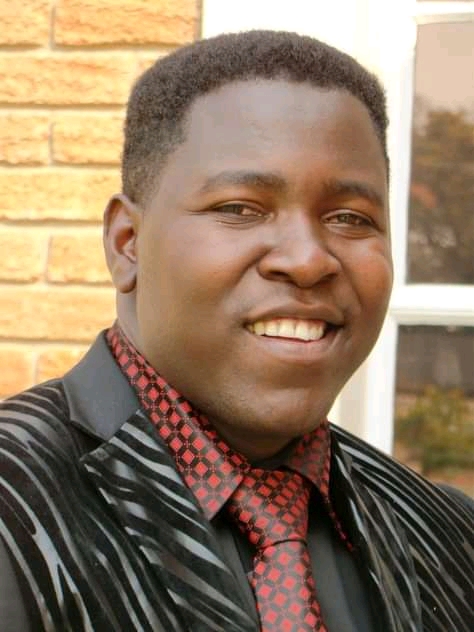
Lorraine Maplanka-Stot and Sabastian Magasha

COVID-19 left some people jobless and other companies scaled down and the music sector has not been spared. The Christian Voice (CV) engaged with gospel music artists.

Gospel musicians, just like other musicians, have been struggling to make a living since concerts have been banned due to COVID-19 regulations.

Lorraine Maplanka-Stot said musicians have been adversely affected by COVID-19 because they depended mainly on live concerts.

“Christian artists are facing challenges because they minister at different churches through invitations, concerts and make money from gate takings or honorariums, but these days it has been quiet” she said.

That challenge did not stop Stot from venturing into other avenues as she said she is now doing retail work to eke a living and advised gospel artists to find other means, besides music, to make money.

“I have been doing buying and selling. I do orders for people from South Africa. My advice to fellow Christian music artists is to have at least four streams of income.  You must have more than one stream of income to sustain your livelihood and not to depend solely on music, though it is our first love and first preference.” she said

Stot, is an award-winning singer as she was nominated in the Outstanding Female Artist category and Outstanding Song of the Year for her song Bekezela by the Bulawayo Arts Awards (BAA).

Sabastian Magasha also stressed challenges faced by Christian musicians especially those who solely depend on their music and their talent to earn a living but COVID-19 disrupted that.

“A lot of musicians were basing only on talent. The arrival of the pandemic affected that in so many ways. We no longer have crowds of people gathering. We make money when people come to our shows and when people pay, but because of the pandemic that has been stopped.” said Magasha.

Magasha called upon the government to come up with means and policies to help musicians in such challenging times.

“This was going to be better if there was a policy or if the government was to come up with a program to support musicians. We want the government to be supportive in what we do because I believe that art is a sector that brings money and forex into our country as well. The government should also protect our music because it is our intellectual property. There is a lot that the government can do to protect, support, and show us that we are important as well. We play a pivotal role in inspiring people”

Magasha said he does not only do music, but he has a job and he volunteers his services for a Foundation. At that foundation they engage and uplift communities in different ways and help them build ways to be self-sustaining.    

“Some of the projects we have been doing are irrigation, gardening, drilling boreholes in rural areas and towns. We are also involved in projects for women in Mutoko who are into sawing.”

Magasha advised Christian artists to be professional, innovative and creative in whatever they do.

“My advice to fellow Christian musicians is to be creative in what they do. Whatever they are doing they should do it wholeheartedly. They should understand that what they are doing is business and have to package it in a manner that is appealing internationally.”

Gospel artists currently resort to online shows, which they are yet to find better means on how to monetize. Magasha encouraged gospel artists to use the internet to sell their music.

“Nowadays a lot of things are happening online; you should also register your work online and make sure you are able to monetize your work be it on Facebook, Instagram, and Youtube. At the end of the day, do not only have one source of income.” He said. 

Beyond being the voice of the voiceless: An Introspective Proposition.

By Kimion Tagwirei

There have been voluminous writings in journals, print and electronic media proposing, supporting and pushing for the Church to be the voice of the voiceless since time immemorial. Most Church bodies and individuals have been speaking out for the poor, weak and oppressed whilst that is commendable, the Church should consider going beyond being the voice of the voiceless. The Church should move from speaking to standing out actively and empowering the voiceless to speak and stand for themselves out of their problems towards their desired needs.

 Being the voice of the voiceless

Biblically, Proverbs 31:8–9 instructs, it is paramount to speak up for those who cannot speak for themselves, ensure justice for those being crushed, advocate for the rights of all who are poor, weak, helpless, oppressed, usually used and abused by selfish politicians for power conquest and retention. That is being the voice of the voiceless – being advocates of those who cannot stand for themselves in our societies. Proverbs 24:11 calls us to “rescue those who are being taken away to death; hold back those who are stumbling to the slaughter,” and Isaiah 1:17 adds; “learn to do well; seek judgment, relieve the oppressed, judge the fatherless, plead for the widow”.

Biblical reflection on voices of the voiceless

 Esther boldly used her influence with king Xerxes to save Jewish people from imminent genocide (Esther 5–10) whilst Amos voiced against oppression of the poor and vulnerable. Nathan diplomatically rebuked King David against power abuse and sexual mania exposed in his case with Uriah’s wife (2 Samuel 11–12). Joseph saved Egyptian people and his family from famine (Genesis 47:13–26), and contributed to critical needs of their times.

Our Lord Jesus Christ declared that the spirit of God was upon him to deliver good news to the poor, heal the broken-hearted, preach deliverance to captives, recovering of sight to the blind and to liberate the oppressed (Luke 4:18). The Bible indicates that voicing for the voiceless is imperative for us to learn from, and contribute towards solutions to identified problems of the voiceless in our communities.

However, speaking out only may not yield needed answers. Historically our Zimbabwean case has shown that those who speak out eventually get victimized, silenced and at times murdered. Usually those who get victimized do not always get adequate help, and those they used to voice for may keep voiceless and helpless. Most of such people who are fighting for the voiceless get limited support in many of our communities. Several outspoken voices of the voiceless eventually get silenced and fall into dustbins of history.

While voicing for the voiceless is very crucial, going beyond that appears highly progressive. Going beyond being the voice of the voiceless is over and above civic engagements, to empowering the voiceless to speak up for themselves and for others, so that whenever need arises, they can stand for themselves and for others. It seems progressive also because if the voiceless get empowered, they become able to stand not only for themselves, but also for and with those who used to advocate for them when victimization and related challenges occur. It will be thrilling to find the once voiceless speaking for their heroes who contributed to their liberation from helplessness and vulnerability.

Life shows that everyone is, and gets voiceless and vulnerable at a certain point and place – age; position, location, health, education, spirituality, economy and politics are part of factors that determine everyone’s vulnerabilities. When too young, or too old; in authority and influence or without; close or away from answers; educated or uneducated; spiritually strong or weak; economically well up or down; politically enabled or restricted; one appears without a strong voice and exposed to various vulnerabilities. In such times short of a voice, each person needs someone to voice for them. We all therefore need others to speak, go an extra mile and stand for us in times of our weakness, helplessness and vulnerabilities. 

Going beyond being the voice of the voiceless

Having done so well in speaking up against evils of our times, it sounds critical to go for extra miles of getting actively involved in areas where needs of the voiceless can be pursued from. The Church should therefore no longer be reactive like watchdogs that only make noise when evil appear. The Church should proactively raise civic leaders, economists, politicians and gospel ministers who will serve humanity as stewards bearing in mind that they are also accountable to God.

Traditionally the Church has been contributing great minds to social, religious and economic sectors of the country as well confirmed by the rise of Christians taking influential positions.

 Unfortunately she has been giving minimum attention to active political involvement. While debates about dangers of active engagement in our Zimbabwean context rage on, Old Testament Biblical lessons through prophetic influence and participation in politics of their times, for example Moses’ leadership in liberating Israelites from Egyptian bondage, and New Testament Mathew 5:13–16’s call for believers to be the salt and light of the world challenge us to get involved towards influencing and showing living examples for life advancement. Imagine having genuine Christians in political, economic and social positions of authority in Zimbabwe – it inspires intensified consideration and efforts for active involvement.

More–so, the voiceless cannot be voiceless for their entire lives and not giving attention to their empowerment is retrogressive and irresponsible. The Church can, and should strategize empowerment programs to enlighten and empower the voiceless in all essential areas such as economics and politics. Basic training programs on civic education and related essentials can enable citizens to stand for themselves and for others in pursuit of their needs from an informed position.

Conclusively, voicing for the voiceless has been greatly sacrificial, lovely and commendable, especially in Zimbabwe where advocacy attracts tragic political victimization. This piece pointed us to the need for further stretches beyond voicing, to standing up, getting actively involved in all areas demanding attention, especially politics, to influence as salt. To provide enlightening examples as light of the world as well as empowering the voiceless to voice for themselves, and for others towards a progressive society in which the able enable others for mutual development and continuity.


Nkayi Mortuary in shambles

A close-up of the foot of a dead person in a morgue. A blank tag is attached to the toe.

Residents of Nkayi have expressed concern over the deplorable state of the Nkayi Hospital, particularly the mortuary.

This was revealed during the scorecard meeting that was recently held by the Local Advocacy Champions (LACs) under Zimbabwe Christian Alliance. The meeting was aimed at scoring the services provided by the hospital as well as the Rural District Council (RDC).

Besides the mortuary that was not functional, they also complained about the shortage of ambulances at the hospital. Speaking during the meeting, the hospital representative, Mr Hlabangana said there was a lot of work pending at the hospital due to limited funds.

“The hospital is not functioning at full capacity as we have limited funds. As I am speaking to you right, we have a big problem, the mortuary is not working, that means dead bodies have to be moved as soon as possible,” he said.

 He went on to say that there was also a challenge with ambulances and that has forced people to look for their own transport to the hospital.

“The money that is being charged for ambulances is very little for cases that would have been referred to Mpilo Hospital. Besides that, we do not have adequate ambulances to carry people who would have been referred and at times we have suggested that people look for their own transports,” he said.

One of the pastors, Reverend Irvine Mthembo who is part of the LAC structures said it was important for the hospital to look for assistance where they are not able. He said there are churches who are running schools and clinics in other areas, if approached they could be of great use.

“I am sure that if churches are approached by the authorities to help with the hospital and the mortuary they would assist. We have some clinics that are running with the aid of churches,” he said.

Speaking on the side lines, the Nkayi RDC CEO appreciated the effort being done by the church in making sure that the council and other stakeholders provide quality service for the development of the community.

“The scoring keeps us on our toes as we work towards improving the services that we are providing. I am happy that our rating has changed compared to the last time and we hope to keep improving although there are some other areas that we still need to pull up our stockings,” he said.

The scoring process was done in Nkayi, Gweru, Chegutu and Masvingo.

Women still not wholly emancipated after 41 years of Independence

IMG_0020

By Juliet Mucharozva

Zimbabwe this year celebrates 41 years of independence and women are still lagging when it comes to exercising their political rights. In the fight for independence, women fought side by side with men for political, social, and economic independence yet after independence they still do not have the full independence as their male counterparts.

Notable women such as the late Sally Mugabe, Ruth Chinamano, Mama Mafuyana took up the front fighting for political independence not ousting the noble and gallant women freedom fighters who gave up their lives for everyone to exercise political freedom rights. However, it is sad that the dream of these women is just a fearful nightmare as after independence nothing much has changed for women political rights acquisition. Women in politics face awful discrimination, misrepresentation in the political space.

In an up-close interview with The Christian Voice, one woman in politics, Catherine Mhondiwa Gweru ward 13 councillor, emotionally outlined that the political space is not a friendly environment for women. Born in 1967 Councillor Catherine Mhondiwa was inspired by hardships that took place during the Economic Structural Adjustment Programme (ESAP) era. She realized that if women could take charge in the leadership sector there will be great transformation in the country.

Councillor Mhondiwa engaged in various demonstrations advocating against political and social injustices. In 2013 she was elected as the Gweru ward 13 councillor and re-elected again in the 2018 elections under the MDC-A ticket.

“My passion has always been fighting for the end of injustices and being a councillor has helped me pursue my passion. However, there is still a lot that needs to be done in our country to fight against political and social injustices as women,” she said.


The councillor enunciated the struggles that women are facing to gain political mileage. She greatly emphasized on the “pulling her down syndrome” where women are crushed down by men not to be front leaders.

“Many men still find it uneasy to engage women in leadership. If men could start treating us as equals in the political field, we could be talking about a different situation right now where some women would perform even better than the men,” she said.

She urged women to choose each other when it comes to selecting leadership as other women also take cohorts with men in pulling down another woman. Mhondiwa urged the government and political parties to formulate policies that will support the representation of women.

“Women are also each other’s greatest enemies as we do not support each other in our endeavours and that needs to end. Political structures and the government should come up with women leadership programs to empower women with good leadership qualities.  Besides such initiatives, society should embrace women leadership and they should know that some leaders are born naturally holding the leadership sceptre,” she said.

The low participation of women in politics is immensely caused by women lacking confidence and fear as the spaces have been dominated by men for ages. Society has restricted politics to men.

“Single mothers or women in general who have tried to penetrate through this fortified male fortress are shunned and booed left and right centre as good for nothing.” she said.

The Councillor who is the only female among seventeen male councillors also grieved on the struggles that she is facing in the council chamber. She recalled painful events after her second election, where one male councillor called her a strong head, and other colleagues shunned her to speak in the council chamber but to write on a piece of paper and give it to the other male counterparts to make them speak for her.

“Women are denied the right to freely exercise their political rights from the grassroot level to the parliament house; their voice is shunned or not taken seriously. Exploring the Zimbabwean parliament house, it has turned to be a battlefield house not a policy making house, where women political leaders are greatly booed when they try to contribute their views,” she said.

Councillor Mhondiwa said the proportional representation which was meant to fill the imbalance gap in the August House has been nullified by male politicians as bacose. These women are stereotyped as people who are holding seats on a pity ticket and they do not have constituencies therefore their voices are not recognized.

“When such things are said about us then how do you expect one to contribute to such an environment? People do not realise that the greatest destruction of a person comes through what is said about them,” she said. 

In her ward, she has managed to deliver better service delivery such as clearing of refuse dumpsites and furnishing local polyclinics with solar energy as the health workers always face problems when electricity is down.

“I have also contributed to the installation of a water tank at the clinic. The Councillor formed a local soccer club meant to help young people in her community to desist from bad social behaviour.

Councillor Catherine Mhondiwa urged women to be brainy, self-disciplined, and principled to take up the political space.

Lupane home destroyed by rains


hut
This year Zimbabwe has a season of abundant rains but in some places, it left a trail of destruction to homes, crops, and livelihoods. 

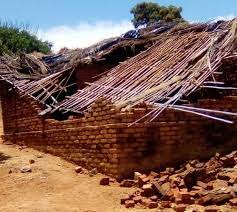
In Silwane village of Lupane District, a family had their house destroyed at night whilst they were asleep in it. The Christian Voice got the sad news from Pastor Dumisani Ncube who is a Peace Ambassador under the Zimbabwe Christian Alliance (ZCA).

“On the 15th of March 2021 in Silwane village, under the kraal leader Bhalanu Sibanda, there is a family whose house was destroyed whilst they slept inside. This was the house with all their belongings after all other houses were destroyed by rains”, said Pastor Ncube.

Pastor Ncube added that the grandmother whose home was destroyed was saved by her grandchildren after they heard the roof falling.

“The widower was saved by her grandchildren, who when they heard the roof falling they wake her up. In the morning she found herself trapped under a roof, we thank God that she came out unhurt”, said Pastor Ncube


In view of that, the widower is seeking help from well-wishers, since she does not have a bigger house. She was only left with a small hut which she shares with her grandchildren. Pastor Ncube said, one of the children was left traumatized and in fear because of what happened. The hut they are left with might also be destroyed.


“What happened is very disheartening. We request well-wishers to bounce their weight and help. In the previous years, we had similar encounters which befell nine homes. This troubles me, and I request people to come through with any help. James 1 verse 27 says we have an obligation or duty to help widows and the fatherless who are in affliction”, said Pastor Ncube

There are also five homes whose boreholes were destroyed by rains. Whereas others had their houses destroyed and that calls for people to help.

“Its costs R8000 to dig or drill one borehole”, revealed pastor Ncube

Sacrificial Leadership

Leadership is more than just being on top of the ladder; it is sacrifice. Jesus Christ is one great leader who gave us timeless lessons of sacrificial leadership. Jesus is one great leader, who from the few 12 disciples, changed the world. But, what made Jesus unique and outstanding? In this article, I glean into lessons that I have built from an acronym of the word sacrifice.

Service

Jesus said, if anyone among you is to become great he must serve (Matthew 20: 26). A leadership position is not for the leader to harvest from the advantages he has, but to add value to humanity and society. However, what we see in the world generally is that most leaders want to be served. Personal gravitas and gratification  becomes the center stage and the leader becomes someone to be feared because they own “the power” to control.

Accountable

Great leaders are responsible for the people they lead, their organizations, the church, and the future. The future is as good as the quality of the leaders we have today. Accountable leaders walk in the principles of God’s word.

Courteous

Jesus was moved but the pains of people and the bible said “He wept” (John 11: 35). In one instance Jesus is heard saying; let the Children come to me (Matthew 19: 14), which showed that he cared for the powerless. John C. Maxwell once said, “People don’t care how much you know until they know how much you care.” Give people your heart before you ask them for their hand.

Relentless

Hard times are part of leadership. At times the very thing you want to do will be questioned not only by your enemies but the ones close to you. The seasons can be so harsh, but it is the leader that must encourage others, despite being in pain. It is said the true strength of a great leader is proved when there is a storm. It is in hard times when great leaders emerge.

Influence

Influence goes beyond endearing as a leader but making a positive difference. Influence is not about control. True influence is seen when people want to buy into your vision in order to live a life that is bigger than them. The word influence is interlinked with the word influenza. Influenza is viral, in the sense that it is infectious.  So is influence from a positive point of view, affect people that they want to become part of your dream.

Focused

Focus means sticking to the vision or commission. Additionally, it means, staying on the vision despite the pain. Jesus knew that he was to face the cross, and he kept focused on that mission of seeking and saving the lost. Someone could have said, but why would I need to face such a tempestuous and torturous time? Jesus endured every pain that a human being could imagine. Leaders go through changes in life, but they need to remain focused.

Imaginative

Albert Einstein once said, "Imagination is everything. It is the preview to life's coming attraction." The role of a leader is to think, visualize and imagine a better future. He might not know exactly the results of his thoughts but through faith, he pushes on. Hebrews 11: 1 (Amplified) says, “Now faith is the assurance (title deed, confirmation) of things hoped for (divinely guaranteed), and the evidence of things not seen [the conviction of their reality—faith comprehends as fact what cannot be experienced by the physical senses]. A leader that is imaginatively ignited and who has fervent faith spurs followers to do more.

Capable

A leader must lead by example. He must be capable, agile, effective, efficient, and skilled in leadership. His capacity and wisdom come from God and an internal hunger to learn more.  In this generation, technology has taught us that things change fast and that requires a leader with learning agility. Arie de Gues in his book, The Living Company said, “Your ability to learn faster than your competition is your only sustainable competitive advantage.”

Engage

Great leaders flee from being engorging to being engaging. Leaders usually have easy access, and that can make them lose meekness to being mean. They lose humility to become haughty. Position at times makes them lose touch with people. Great leaders know how to work with people. They know how to pick the best human capital that will help them excel. That can only happen when the leader is in touch with people.

Parting point: Jesus Christ was indubitably a great leader. He sacrificed more to save humanity. As we celebrate Easter, rethink your leadership skill and pray that God gives you the strength and sagacity to lead his people.

Jonah Nyoni is an author and speaker. 

Celebrating New Life: Easter Reflections from a Biblical perspective

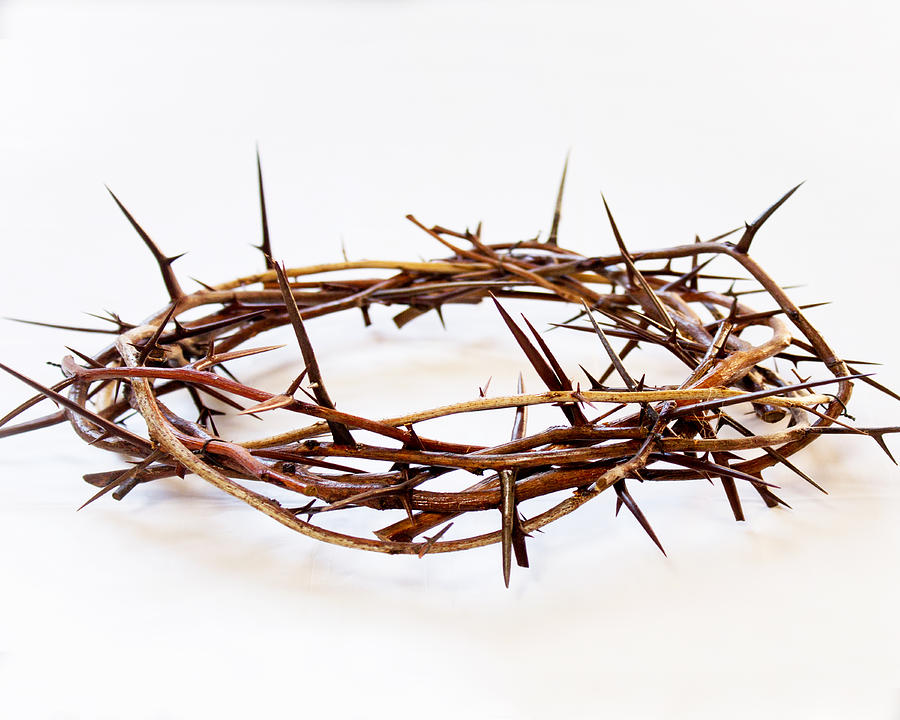
Crown of thorns 2

 By Kimion Tagwirei

Countless Christians in Zimbabwe and across the world celebrate Easter from this Friday hitherto Monday, albeit mostly in virtual ways, observing government and World Health Organization (WHO) restrictions set in attempts to curb the spread of the tragic Coronavirus.  The virus which reportedly started in Wuhan late 2019 has killed more than 1.6 million, sickened more than 70 million people globally to-date.

This article reflects on transforming good news about the newness of life from the death and resurrection of Jesus Christ outshining endless debates on Easter name, dates, origins and related historical matters.

Traditionally marked by massive Church conferences, family get–togethers’, travels and outings, Easter has remained widely celebrated.

What is the meaning of Easter?

While those who critique Easter from pagan origins and related misgivings condemn it, the value of the death and resurrection of Jesus Christ keeps undeniably important and worthy continuous reflections and celebrations.

To my concurrence, New Testament scholar Dr Taremeredzwa Bishau once spoke through Sunday Mail (16 April 2017) that “historians concerned themselves with dates and venues, but New Testament scholars know that for early Christians, dates were not as important as the events that were celebrated. What happened was that Jesus was transforming already existing Jewish feasts which were celebrated on specific dates following the Jewish calendar giving them new meaning in the light of his advent. He transformed the Passover celebrations into celebrations about his sacrifice on the cross. He gave the Passover meal a new meaning and called it the new covenant. That is what was important for the early Christians. Just like with the birth of Jesus, the early Christians never specified the actual date of birth because what was critical and therefore what was celebrated was the Epiphany itself”.

Concurringly, various theological scholars find no problems with differences about dates, places and direct their focus on the meaning as well as relevance of the death and resurrection of Jesus Christ.

Easter can be understood from Pesach (Passover), which Biblically speaks to the spilling of blood for liberation of sinners, which foreshadowed the death and resurrection of Jesus Christ that redeemed humanity, not only Christians, but all human beings from fatal enslavement of sin to holistic freedom in Jesus Christ. While the term Easter was historically associated with an ancient goddess, it can be rightly used today, as dates and names are given meanings, value and relevance by people for intended purposes. According to Fairchild (2021), Easter is about celebrating the life–bearing death and resurrection of Jesus Christ, well accounted in Matthew 27:27–63; Mark 15:16–47; Luke 23:26–56; and John 19:16–42.

Is it therefore wrong to celebrate Easter? Arguably as it is not wrong to remember the resurrection of our Lord and Saviour Jesus Christ, it is commendable for all human beings to celebrate the death and resurrection of Jesus Christ without any pagan influence, but with biblical inspiration and conviction. Similarly, as the Bible does not mention eggs, bunnies and chicks as connected to his death and resurrection, the way we celebrate Easter as Christians must not spiritualize the unbiblical.

Reflecting on New life from the Cross

Has attending Easter conference, family gatherings, outings, enjoying special meals and meeting people meant anything important since time immemorial? Is Easter significant to you and me today? These questions sound critical if we deepen and widen thoughts about Easter, and this article uncovers part of the essentials. The lifetime significance of Easter is Jesus Christ’s victory over death. His resurrection means eternal life granted to everyone who believes in Him. The purpose of Easter celebration therefore stems from the accomplishment of Jesus Christ’s three–year ministry – expression and fulfillment of God’s love, grace and salvation of humanity.

The death and resurrection of Jesus Christ is the heart of the gospel. As Paul observes, if Christ is not raised from the dead, our preaching and hope lie in vain (1 Corinthians 15:14). Essentially, without the resurrection, Christian preaching and faith would be empty. The death and resurrection affirm Jesus of Nazareth beyond being the prophesied Messiah of Israel to being the King and Lord of humanity on earth and in heaven.

Consequently, Easter celebrations glorify Jesus Christ’s resurrection from the dead, and His transformative assurance of eternal life for all who believe in Him. Few of several inspiring Bible verses about Easter include; 1 Peter 1:3,“Blessed be the God and Father of our Lord Jesus Christ, which according to his abundant mercy hath begotten us again unto a lively hope by the resurrection of Jesus Christ from the dead”. This reflects that the death and resurrection of Jesus Christ delivered us from our old dirty, sinful and shameful ways of living into our new clean, righteous and glorious life in Christ.

Additionally, John 11:25, “Jesus said unto her, I am the resurrection, and the life: he that believeth in me, though he were dead, yet shall he live” also assures that while we may suffer and die on earth, we are guaranteed of eternal life free of earthly troubles in heaven. Realizing this inspires faith in God, and endurance on earth for a guaranteed life beyond the grave.

There are several other Biblical references indicating what we got from the death and resurrection of Jesus Christ, which deserve reflection and celebration, mostly rooting on the fact that Jesus Christ brought us new life. As Spurgeon (1891) once voiced, the resurrection of Jesus Christ is glorious in contrast with his humiliation. It has sufficient redemptive glory from the painful shame of his crucifixion. Mathew 20:18–19 says that he was to be betrayed, condemned to death, delivered to the Gentiles, mocked, scourged, and crucified; but remarkably all gloom of that tragedy got dismissed by his resurrection. Great victory overtook sorrow as death succumbed to resurrection.

Jesus Christ freed us from the deadly bondage of sin (John 3:16), and fulfilled God’s redemptive word (Isaiah 53:4–12). It is so apt to reflect on newness of life during this Easter period. Rethinking that when we are born again in Him, we become new creatures (2 Corinthians 5:17), old things pass away, everything becomes new and we experience new living inspired and guided by God’s word – showcasing celebratory new life. Scriptures portray it like a turn around, manifesting through a dramatic shift of lifestyle, values, relations with God and other people.

Remembering Jesus Christ’s new commandment for us to love one another as He has loved us (John 13:34–35) cements the foundation of newness. When we love each other as Jesus loved us, we mature into new talks and walks of life. We become real disciples of Jesus Christ who live in love, grace and peace – further depicting a sweet new life. It leads us to loving ourselves, loving others, caring for ourselves, caring for others, reaching out to others with the gospel and taking part in the transformative Great Commission presented through Mathew 28:19–20.

More–so, this new life beams with new hope that defies death. Remembering the cross pictures God offloading our burdens, as Jesus Christ carried our sins. As Jesus Christ questioned, “My God, my God, why hast Thou forsaken me?” (Mathew 27:46), He endured being forsaken by God to redeem you and me from our sins. The cross staged inexplicable love, grace and care of God for us. It transferred us from pain to gain, sorrow to celebration and enslavement to liberation – sin to righteousness, forgiveness to sanctification as well as hopelessness and helplessness to hopefulness and helpfulness in Jesus Christ.

We now live-in high hope in His promises. Regardless of various spiritual, social, economic and political challenges we face today, we can now always hold on to the hope in our loving, gracious and caring God, as His word assures answers to our needs and eternity (1 John 5:13–14 and 1 Peter 1:3–6).

Conclusively, nothing beats the joy of holistic liberation from the bondage of sin that could haunt our lives forever down to burning hell. This article unapologetically submitted that the death and resurrection of Jesus Christ is the bedrock of Christian Easter celebration without any pagan influences, with Biblical inspiration and conviction well reflected herein for us to celebrate new life graciously freed from our old sinful lives.

Easter under lockdown!

Easter under lockdown!

cross

This year Easter was different especially for children who are in boarding schools as the government recently announced that they will not be go back to their homes whilst churches were discouraged from travelling for Easter Camps so as to reduce the spread of the novel Coronavirus.


The Minister of Information and Broadcasting services, Mrs Monica Mutsvanga announced the developments after a cabinet meeting.  According to the cabinet press briefing, she said school children will not be travelling to their homes for the holiday but will remain at their respective schools.


“School learners who are in boarding schools will not be permitted to travel back home. Equally, no parents will travel to concerned schools for purposes of visits,” read the statement.


The move comes as means of reducing the spread of Coronavirus in the country.  The President of Zimbabwe, His Excellency Emmerson Dambudzo Mnangagwa in his statement also mentioned that travellers without Covid-19 PCR tests not more than 48 hours will be quarantined for 10 days.


“In keeping with Christian practices, Zimbabweans flock to different places of worship with some visiting holy shrines.  The risk of the transmission during this period is thus predictably high. To safeguard our nation, we need to take some additional measures to avoid a third wave of the pandemic which is already attacking some Nations of the World,” he said.


He encouraged citizens to be vaccinated against the pandemic so that the country reaches herd immunity.

“People from different localities are encouraged to come forward to designated centres for vaccination so that our nation builds towards herd immunity. Wearing of masks and social distancing will be strictly adhered to and enforced,” read the statement.


Church gatherings and any other gatherings are still pegged at a maximum of 50 people. Churches are advised to follow the World Health Organisation guidelines so as to reduce the spread of the virus.


“All gatherings including church services, funerals and weddings will remain limited to not more than 50 people. The general public is encouraged to defer unnecessary travel outside localities of residence,” he said.

Writing on his Twitter page, Professor Solwayo Ngwenya encouraged people to stay at home as danger was still lurking.  He urged people to take extreme measures to protect each other from the pandemic.


“As we approach the holidays please take extreme measures to protect yourselves, and others. There is absolutely no need to go out to crowded places. Spend time at home with your family. There will be other holidays ahead. There are now new deadlier variants,” he said.


He said the third wave was looming and it was possible for it to be catastrophic due to its sudden appearance.

“This is not the time for false excitable reassurance thinking that the virus has gone away or has been defeated. The risk looms large, the 3rd wave is being brewed by us alone, by our human action.


The 3rd wave as I was saying, will appear suddenly due to the amazing complacency displaced at all levels. And it will be catastrophic due to its sudden appearance. However, we alone can prevent it by taking extreme measures,” he said.


ZCA Covid-19 survey attracts attention

Zimbabwe Christian Alliance’s survey on Covid-19 vaccine that was done by its advocacy department has caught the attention of various media houses in the country. The survey informed that most of the people interviewed proved to have little or no knowledge of the vaccine which in turn has fuelled the resistance to the vaccine. 


The Standard Newspaper, on the 14th of March had the headline, “Survey shows Zimbabweans reluctant to get Covid vaccine.


The ZCA survey was also reported in the Chronicle newspaper of 19 March. It captured that the survey had established that most people are lacking correct and adequate information on the Covid-19 vaccine.

“A SURVEY has established that most of the country’s citizens lack adequate information on the Covid-19 vaccination rollout programme.


A week ago the Centre For Innovation and technology (CITE) also reported that “ Others... are unwilling to be vaccinated due to their religious convictions, general mistrust about the vaccine and medical reasons as they suffer from chronic diseases.”


Other online publications that captured the ZCA Survey report include Pindula.co.zw, Zimbabwesituation.com and the Zimeye.net.


According to the survey, 75,1 percent of the people interviewed said they would not take the vaccine citing inadequate information about the vaccine and its possible side effects. 10.7 percent of people agreed to taking the vaccine as they had confidence in the scientific process whilst 14.2 percent were not sure if they would take the jab.


“A major finding that was captured during the survey is that a lot of people are ignorant about a plethora of issues around acquisition, administration and side effects about the vaccine. This is a cause for concern as the Covid-19 pandemic has had dire effects globally,” read the survey.


The survey was conducted on the ZCA local structure whatsapp groups, which are made up of church leaders, women and youths across the 10 provinces in the country. A total of 561 people took part in the survey.

 On one of the respondents from Hwange identified as Captain Saini T Bhidhi said social media has played a major role in influencing the decisions made by people of which might not be accurate.


“The biggest challenge I have seen is that social media has contributed so much to the dilution of information that we are getting and there are so many theories that are being shared. You will find that many times we are being vaccinated and we do not ask why but in this case people are questioning the vaccination due to the stories that are doing rounds in our social networks,” he said.


In Masvingo, Pastor Rebean Dirikwe said he would take the vaccine but on condition that he has enough information on it. He said his decision will be influenced by the level of knowledge he has on the vaccine.

“I will say yes, but with a condition if we received all the necessary information which people are demanding from the responsible authorities,” he said.


Currently, 41 687 people have been vaccinated who are frontline workers.

Leadership in our times- Part 1

Leadership in our times- Part 1

Most Christians have reservations about aspiring to be leaders.  They are unsure about whether it is truly right for a person to want to be a leader.  After all, is it not better for the position to seek out the person rather than the person to seek out the position?


No doubt, Christians must resist a certain kind of ambition and rid it from their lives.  Jeremiah 45 vs 5,  "And do you seek great things for yourself? Do not seek them; for behold, I will bring adversity on all flesh," says the LORD. "But I will give your life to you as a prize in all places, wherever you go."


But we must acknowledge other ambitions as noble, worthy, and honorable. 1 Timothy 3 vs 1 (NEB) says, “To aspire to leadership is an honorable position.” Paul urges us to the work of leading the church, the most important work in the world.


When our motives are right, this work pays eternal dividends.  And so Jeremiah gave Baruch some very wise and simple counsel.  Jeremiah 45  vs 5,  "And do you seek great things for yourself? Do not seek them; for  behold, I will bring adversity on all flesh," says the LORD. "But I will give your life to you as a prize in all places, wherever you go."


The prophet was not condemning all ambition as sinful, but he was pointing to selfish motivation that makes ambition wrong – “great things for yourself.” Ambition that centres on the glory of God and welfare of the church is a mighty force for good. The word ambition comes from a Latin word meaning  “campaigning for promotion.”  The phrase suggests a variety of elements:

a.         Social visibility and approval.

b.         Popularity.

c.         Peer recognition.

d.         The exercise of authority over others.


Jesus had no time for such ego-driven ambitions.  The true leader will never  “campaign for promotion.” To his ambitious disciples Jesus announced a new standard of greatness. Mark 10 vs 42-44: “But Jesus called them to Himself and said to them, ‘You know that those who are considered rulers over the Gentiles lord it over them, and their  great ones exercise authority over them.  Yet it shall not be so among you; but whoever desires to become great  among you shall be your servant. And whoever of you desires to be first shall be slave of all."

True service is never without cost. Often it comes with a painful baptism of suffering.


THE SEARCH FOR LEADERS.

Psalm 75 vs 6-7: “For exaltation comes neither from the east Nor from the west nor from   the south.  But God is the Judge: He puts down one, And exalts another”.


George Liddel said,” Give me a man of God – one man, one mighty prophet of the Lord, and I will give you peace on earth, bought with a prayer and I will give you peace on earth, bought with a prayer and not a sword.”. Real leaders are in short supply.  Constantly people and groups search for them.  Throughout the Bible, God searches for leaders, too.


1Samuel13 vs 4: “Now all Israel heard it said that Saul had attacked a garrison of the Philistines, and that Israel had also become an abomination to the Philistines. And the people were called together to Saul at Gilgal.

Jeremiah 5 vs 1: "Run to and fro through the streets of Jerusalem; See now and know; And seek in her open places If you can find a man, If there is anyone who executes judgment, Who seeks the truth, And I will pardon her.”

Ezekiel 22 vs 30: "So I sought for a man among them who would make a wall, and stand in the gap before Me on behalf of the land, that I should not destroy it; but I found no one.” The Bible shows us that when God does find a person who is ready to lead, to commit to full discipleship, that person is used. Such leaders still have shortcomings and flaws, but despite them, they  become spiritual leaders. Such were: Moses, Gideon, David. Martin Luther, John Wesley and William Carey.


To be a leader in the church has always required strength and faith beyond  the merely human. Many people regard leaders as naturally gifted with intellect, personal forcefulness and enthusiasm. Such qualities certainly enhance leadership potential, but they do not define  spiritual leadership. True leaders must be willing to suffer for the sake of objectives great enough to demand their wholehearted obedience. Spiritual leaders are not elected, appointed or created by synods or church assemblies.  God alone makes them.


Samuel Brengle, a gifted leader who served for many years in the Salvation Army, outlined the road to spiritual authority and leadership. He states the following:

“It is not won by promotion, but by many prayers and tears.  It is attained  by confession of sin, and much heart searching and humbling before God;  by self-surrendering, a courageous sacrifice of every idol, a bold  uncomplaining embrace of cross, and by an eternal, unfaltering look unto  Jesus crucified.  It is not gained by seeking great things for ourselves, but like Paul, by counting those things that are gain as loss for Christ.  This is a great price, but it must be paid by the leader who would not be merely a nominal but a real spiritual leader of men, a leader whose power is recognized and felt in heaven, on earth and in hell.”


 God wants to show such people how strong He really is. 2 Chronicles 16 vs 9: "For the eyes of the LORD run to and fro throughout the whole earth, to show Himself strong on behalf of those whose heart is loyal to Him. In this you have done foolishly; therefore from now on you shall have wars." This price must be paid, before any public office or honour.


Part two of this article will focus on: Characteristics of great leaders. Don’t miss it! Follow us on twitter: @zcalliance1